
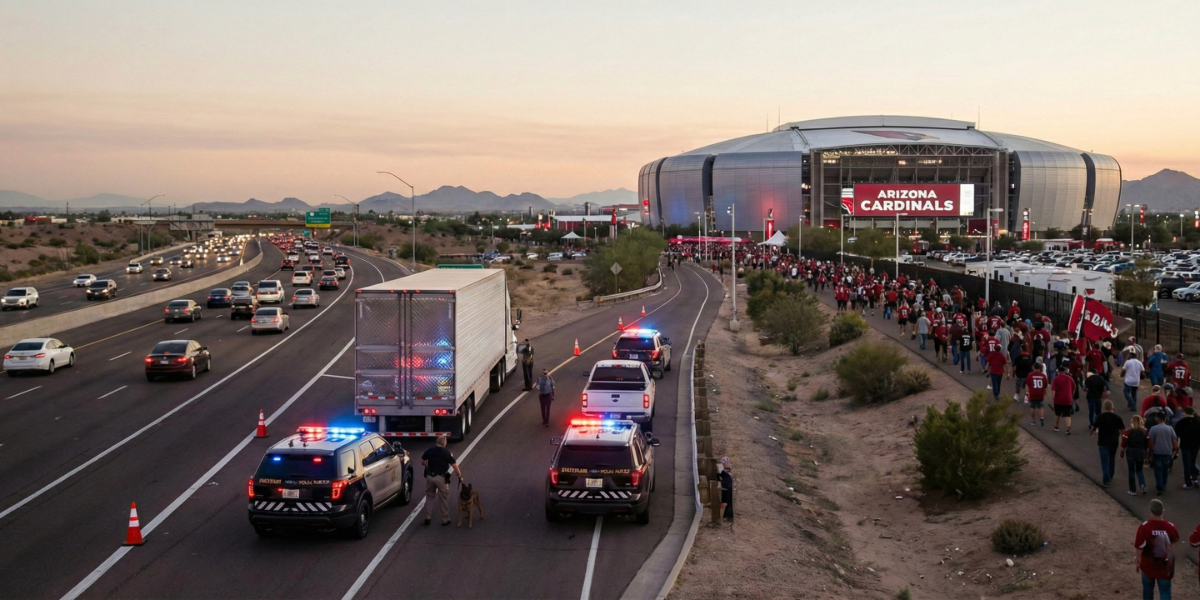
Large Sporting Events and Drug Trafficking in Arizona: A Closer Look at Legal Challenges
Major sports events in Arizona often bring excitement, massive crowds, and a unique atmosphere. However, they also spark certain legal challenges that can be intimidating for those caught in the crossfire. This opinion editorial lays out the reality of drug trafficking charges and legal rights during these events while exploring the tricky parts of Arizona’s drug laws.
As state and federal law enforcement agencies ramp up their patrols during high-profile gatherings—whether it’s the Super Bowl, College Football Playoff games, or other marquee matchups—they are keen on maintaining public safety. In this piece, we examine how increased law enforcement efforts intertwine with the transportation of illegal drugs during large events, and how legal defenses are constructed when charges arise.
Understanding Arizona’s Drug Trafficking Laws in a Busy Environment
Arizona has a reputation for enforcing some of the strictest drug laws in the nation. The state’s legal framework regarding controlled substances is full of problems that can catch even a seasoned traveler by surprise. When large events hit the streets, the potential for drug trafficking charges increases dramatically, making a clear understanding of Arizona’s drug laws absolutely critical.
Key Statutes and the Legal Framework
Arizona’s primary drug trafficking statutes include ARS § 13-3405 for marijuana offenses, ARS § 13-3407 for dangerous drugs like methamphetamine, and ARS § 13-3408 for narcotics such as heroin and cocaine. Under these laws, it is illegal to knowingly possess, transport, sell, or offer to sell controlled substances. The legal process requires the state to prove that the individual consciously dealt with these substances.
During large gatherings, law enforcement agents are on high alert, meticulously observing traffic, crowds, and even minor traffic violations. What might begin as a simple speeding ticket can quickly spiral into an investigation if certain telltale signs—like cash, packaging materials, or scales—are found. This has led to many cases that pivot on the fine points of evidence and the subtle twists involved during a search or arrest.
Heightened Enforcement During Major Sporting Events
When Arizona hosts large events, the increased law enforcement presence is as visible as it is impactful. The scenario is loaded with tension and often presents nerve-racking experiences for drivers and event-goers alike. Understanding these dynamics is essential for preparing legal defenses in case the situation escalates.
Intensified Patrols and Coordination Among Agencies
During high-profile sports events, there is a coordinated effort among state agencies such as the Department of Public Safety (DPS) and local police, as well as federal agencies. Officers increase their presence on major highways like I-10, I-17, and I-40 and work closely with joint task forces aimed at deterring illegal activity. This surge in agency activity is not simply a byproduct of the event itself; it is a proactive strategy to ensure that increased crowds do not hide any dangerous criminal behavior.
Police may initiate traffic stops for trivial issues such as speeding or improper lane changes. During these minor stops, law enforcement officers may ask detailed questions about travel plans, inspect vehicles for signs of controlled substances, or even claim to detect the scent of marijuana. Even a minor infraction can pave the way for further searches, increasing the risk of finding drugs, which then escalates the case into a full-blown drug trafficking investigation.
The Impact of Increased Visibility
The extra visibility of law enforcement during these events means that ordinary citizens might suddenly find themselves under heightened scrutiny. The increased patrol intensity is like a double-edged sword—while it helps to deter criminal activity, it also increases the chance that people might be inadvertently pulled into an investigation. This always leads to the question of whether constitutional safeguards were respected during these stops.
The Fourth Amendment to the U.S. Constitution is designed to protect citizens against unreasonable searches and seizures. However, in the whirlwind of a high-security event, distinguishing between a routine security measure and a constitutional violation can become a complicated piece of legal debate. Detailed examination of search procedures during these moments is crucial for ensuring that any evidence gathered unlawfully may be subject to suppression.
Threshold Amounts and Their Consequences Under Arizona Law
One of the trickiest features of Arizona’s drug laws involves “threshold amounts.” These predetermined limits—set out in ARS § 13-3401(36)—help define when possession and transportation of drugs are presumed to be for sale. When someone is found with more than the statutory threshold, they face significantly harsher charges, often as Class 2 felonies.
What Constitutes a Threshold Amount?
For instance, consider the following examples of threshold amounts under Arizona law:
- Marijuana: Possession over 2 pounds can quickly trigger charges of intent to sell.
- Methamphetamine: Possessing over 9 grams falls into a similar category.
- Cocaine: Having more than 9 grams can lead to charges as well.
- Heroin: A mere 1 gram is enough to boost the charges significantly.
- LSD and PCP also have specific measured limits that, if exceeded, result in severe legal consequences.
These thresholds play a key role in tipping the scales from a simple possession charge to a trafficking or intent-to-sell charge. When law enforcement finds that a drug’s weight surpasses these limits, the state’s argument becomes much stronger. However, exceeding a threshold does not mean an automatic conviction—the state still bears the burden of proving the weight, identity, and that the individual had full control and knowledge of the drugs in question.
Legal and Practical Implications
Once the threshold is crossed, the potential penalties become considerably more intimidating. Often charged as Class 2 felonies, convicted individuals may face mandatory prison sentences, fines up to $150,000, driver’s license suspension, and even asset forfeiture. These consequences extend far beyond the courtroom, potentially affecting employment, housing, and even the right to bear arms. Such outcomes illustrate why facing these charges is often a nerve-racking experience and why early legal intervention is super important.
A table below summarizes the different potential charges related to drug trafficking violations in Arizona:
| Offense Type | Classification | Presumptive Prison Term (First Offense) | Maximum Fine | Relevant Statute |
|---|---|---|---|---|
| Marijuana Transportation (over 2 lbs) | Class 2 Felony | Up to 5 Years | Up to $150,000 | ARS § 13-3405 |
| Methamphetamine Transportation for Sale | Class 2 Felony | Up to 10 Years | Up to $150,000 | ARS § 13-3407 |
| Narcotic Drug Transportation (Heroin/Cocaine) | Class 2 Felony | Up to 5 Years | Up to $150,000 | ARS § 13-3408 |
| Drug Paraphernalia | Class 6 Felony | Up to 1 Year | Up to $150,000 | ARS § 13-3415 |
The table above highlights just a few of the many pitfalls that individuals may encounter. Many find themselves facing these charges after an innocent-seeming traffic stop or routine vehicle inspection. This is why understanding these legal issues is not merely academic—it can have life-altering implications.
Real-World Encounters: When a Routine Stop Escalates Quickly
Real-world examples serve as stark reminders of how quickly a standard situation can change. Under heightened security during large events, minor infractions can lead to significant legal complications, and the charges can escalate rapidly.
Case Studies from the Field
Consider a driver heading to a major championship game who is stopped for a simple speeding violation along I-17. What starts as an ordinary stop can turn intimidating when officers decide to inspect the trunk and discover several pounds of what appear to be marijuana products. Because the weight exceeds the 2-pound threshold, the case shifts to an investigation of transportation for sale. What might have been a casual outing suddenly becomes a tangled issue with potentially life-altering consequences.
In another instance, two individuals attending a popular sporting event in Phoenix are pulled over on I-10 for an ordinary traffic stop. During the inspection, officers find a backpack in the vehicle containing more than 9 grams of methamphetamine. Despite both individuals being innocent bystanders in terms of planning criminal activity, law enforcement may argue joint control over the vehicle, thereby implicating both parties in the offense. These examples underscore how even minor deviations in behavior or routine violations can expose one to charges that are heavy with legal consequences.
Lessons Learned from Increased Traffic Stops
These real-life scenarios emphasize the importance of understanding the legal process. Many cases rapidly become nerve-wracking scenarios that highlight the need for early legal representation. They also illustrate that, regardless of whether the drugs were originally intended for trafficking or simply possessed accidentally, police have a high degree of discretion during these busy periods, and constitutional rights may be tested during the process.
Defending Your Rights Under Constitutional Law During a Drug Investigation
Even in the heated atmosphere of increased law enforcement activity during sports events, constitutional protections remain essential. The Fourth Amendment guarantees the right to be free from unreasonable searches and seizures, a safeguard built to shield every citizen against overzealous policing methods.
Recognizing When Constitutional Rights Are Violated
Often, cases hinge on how evidence was collected and whether police procedures adhered to constitutional standards. If an officer conducts an improper traffic stop or exceeds the bounds of acceptable procedure when administering a search, this can open the door to crucial legal challenges during trial. Evidence discovered in violation of your rights can be excluded, potentially weakening the prosecution’s case considerably.
This is one of the small distinctions that can make the difference between a conviction and a case being dismissed. Whether you are pulled over near a bustling stadium or somewhere more remote, the same legal rules apply, and both drivers and passengers have the right to insist on fair treatment under the law.
How Legal Representation Can Tip the Scales in Your Favor
Experienced defense attorneys understand the subtle details of what constitutes a lawful search. Lawyers who have worked as former prosecutors or with federal agencies are in a prime position to identify whether the methods used in gathering evidence were overboard. They can pinpoint exact procedures—like the legal bounds of a traffic stop, the limits on the number of questions an officer may ask, or the guidelines for searching a vehicle—that, if misapplied, offer strong defense angles.
An attorney who is well-versed in both federal and Arizona state laws can provide a robust defense by ensuring that every little twist in procedure is thoroughly examined and, if necessary, challenged on appeal. In these cases, having legal representation early on can be super important in mitigating the potential for a harsh penalty.
Common Defense Strategies When Facing Drug Trafficking Charges
Every case is unique, and the defenses that apply in one scenario may not work in another. However, there are several common strategies that experienced attorneys use to protect their clients’ rights when they are confronted with drug trafficking charges.
Challenging Unlawful Searches and Seizures
One of the foundational strategies is contesting the legality of the search or seizure that led to the discovery of drugs. If the initial traffic stop or vehicle search did not meet the Constitution’s Fourth Amendment criteria, the evidence obtained may be rendered inadmissible. This approach often involves a deep dive into the small distinctions regarding probable cause and the officer’s adherence to protocol.
Legal experts scrutinize every detail—from the reason for the stop to the method of search—to ensure that all evidence was collected in accordance with the law. This method of defense can sometimes lead to a major dismissal of charges or a reduction in the severity of any charges brought forward.
Arguing Lack of Knowledge and Intent
Another defense strategy revolves around proving that the accused did not have explicit knowledge of the drugs, nor did they intend to engage in trafficking. The state’s burden of proof requires establishing that you knowingly possessed or transported drugs. If there is any room to challenge that assertion—perhaps due to a lack of control over the substance—the defense can seize that opportunity.
For example, if drugs were found in a shared vehicle or within the belongings of someone else, an attorney might argue that the accused was not fully aware of the presence or quantity of the controlled substances. This defense relies heavily on the defendant’s version of events and requires meticulous attention to every minor detail.
Spotting Errors in Evidence Handling
Errors in the chain of custody or the procedures followed during evidence collection can play a significant role in drug trafficking cases. If laboratory procedures were faulty, if weighing scales were inaccurate, or if the handling of evidence showed signs of confusion, these can all become key points of contention in court.
Legal professionals sometimes uncover small mistakes—like misplaced labels or procedural oversights—that can add up to a major issue, potentially leading to the dismissal of crucial evidence and weakening the prosecution’s case. This strategy involves getting into the nitty-gritty of every step of the investigation.
Utilizing Real-World Examples to Underscore Defense Points
Attorneys often cite past cases where similar defenses have succeeded. Real-world examples, such as those involving casual traffic stops that unexpectedly turned into drug investigations, serve as valuable precedents. By drawing parallels between past outcomes and current circumstances, defense attorneys can demonstrate how evidence should have been properly collected or how the state failed to meet its burden of proof.
These comparisons not only help in forming a strong narrative for the case but also give juries an accessible way to understand the implications of legal missteps by law enforcement.
In the Hot Seat: The Role of a Federal Defense Attorney in These Cases
When facing drug trafficking charges during high-profile events, having a seasoned federal defense attorney on your side can be key. These legal professionals bring years of experience from both the prosecution and defense perspectives, making them adept at handling the twists and turns of complicated cases.
Experience That Makes a Difference
Attorneys with diverse backgrounds, including experience as federal prosecutors, tend to know exactly what strategies the state might employ in building their case. This first-hand insight into the workings of the prosecution allows defense attorneys to craft arguments that poke around the weaknesses in the government’s strategies. Every subtle part of the investigation—from the moments leading up to a traffic stop to the details of subsequent searches—can be examined and challenged.
Furthermore, federal defense attorneys know that each case is unique. They are skilled at adapting their approach to the specific facts and evidence available. Whether fighting for the exclusion of unlawfully obtained evidence or challenging the methodology behind drug testing, these legal experts can make a significant impact on the outcome.
Strategic Legal Steps to Consider
If you suspect that your rights might have been violated during the process, or if you believe that errors were made in the handling of evidence, it is essential to get legal advice immediately. The following strategic steps are often recommended:
- Request an early consultation with an experienced drug defense attorney.
- Document every detail from the traffic stop, including any interactions with the police.
- Review all evidence collected during the investigation for procedural errors.
- Ensure that any violation of constitutional rights is promptly noted and documented.
These measures are not just defensive postures—they are proactive steps that help ensure your legal rights remain protected during a stressful period.
Frequently Asked Questions About Drug Trafficking Charges
Given the nerve-wracking legal landscape during large sporting events, many people have pressing questions when it comes to drug trafficking charges and legal defenses in Arizona. The following FAQs offer clarity on some of the most common questions.
Can I Face Charges Even if the Drugs Aren’t Mine?
Yes. Even if the controlled substances were not directly owned by you, if prosecutors can establish that you had control over them, you might be charged with possession or trafficking. Courts look closely at factors such as who had the authority to access the drugs and whether they were aware of their presence.
Do Interstate Movements Automatically Trigger Federal Charges?
Not necessarily. Crossing state lines can sometimes bring a case under federal jurisdiction, but many cases remain under state law. The specific circumstances of the case determine whether federal statutes apply, which makes it critical to understand the context of any investigation.
Is Probation an Option in These Cases?
Often, probation is not available when the threshold amounts are exceeded. The severity of the charges—especially when the state argues intent to sell—can eliminate the possibility of probation. However, each case depends on its specific facts and the discretion of the court.
What Should I Do If I Am Stopped by the Police?
It is essential to remember that you have the right to stay silent and request an attorney, even if you believe the stop is routine. Avoid making statements that could be misinterpreted as evidence against you, and do not consent to searches without legal advice. Maintaining your constitutional rights is a super important part of protecting yourself legally.
Final Thoughts: Staying Informed and Proactive
In the shadow of large sporting events, the possibility of encountering drug trafficking charges is a very real scenario that many individuals fear. While the state’s enhanced efforts to maintain public safety are understandable, they also create circumstances where seemingly minor infractions can rapidly escalate into major legal challenges.
The legal landscape in Arizona regarding drug trafficking is filled with confusing bits and hidden complexities, particularly when it comes to threshold amounts and intensified enforcement during major events. Being aware of these issues and understanding your constitutional rights can be the difference between a streamlined legal process and a protracted, intimidating trial.
Key Takeaways for Protecting Your Rights
It is crucial for anyone caught in this legal web to:
- Be aware of the specific threshold amounts defined by Arizona law.
- Understand that increased law enforcement during large events can lead to more surveillance, traffic stops, and drug investigations.
- Recognize that constitutional safeguards are in place to protect against unlawful searches and seizures.
- Seek early legal counsel if you are ever under investigation or charged with a drug-related offense.
- Be prepared to challenge any evidence obtained through questionable procedures.
These action steps provide a roadmap for those who need to figure a path through the maze of drug trafficking laws and enforcement practices.
Why Early Legal Intervention Is Super Important
The reality of drug trafficking charges extends far beyond the immediate legal ramifications. A felony conviction—especially one involving threshold amounts—can affect nearly every aspect of one’s life, from professional licensing to personal freedoms such as owning a firearm. For these reasons, consulting with a seasoned defense lawyer as soon as possible is not just advisable, it is super important.
Legal experts, particularly those with extensive experience as former prosecutors, can help you work through the tangled issues of your case. They know exactly how to uncover procedural flaws, properly challenge evidence, and ensure that your constitutional rights are upheld. The role of an experienced attorney becomes even more critical when dealing with charges that carry heavy penalties.
Looking Ahead: Staying Informed in a Changing Legal Climate
The legal environment continues to evolve, and as public events grow larger and more dynamic, law enforcement tactics will likely adjust in response. It is crucial for individuals—especially those who frequently travel or attend major events—to stay informed about the latest trends and legal interpretations surrounding drug trafficking laws.
Being proactive means not only knowing the law but also having access to quality legal representation that understands both the fine points of the current legal system and how to challenge those that were process-wise mishandled. An informed citizen, armed with the right legal advice, is best positioned to protect their livelihood and future.
Conclusion: Balancing Public Safety with Individual Rights
Arizona’s approach to enforcing drug trafficking laws at large sports events underscores a balancing act: maintaining public safety while safeguarding individual rights. While the busy period of sporting events might create an environment loaded with legal pitfalls, understanding your rights and the methods available for defense is a must-have tool for everyday citizens.
From the bustling highways that connect Phoenix and its neighboring areas to the parking lots of major stadiums, the reality is that increased law enforcement means more interactions that can unexpectedly tip into legal investigations. Whether you are simply a fan or a resident, staying informed and seeking prompt legal counsel can make all the difference.
Ultimately, the conversation around drug trafficking laws and large sporting events is not just about enforcing laws—it’s also about ensuring that every individual has the proper defenses if their rights are compromised. The legal system, much like the events it polices, is full of twists and turns, and having experienced guidance can help steer through even the most confusing bits of these complex situations.
As public gatherings continue to grow in scale and complexity, there is an ongoing call for balancing stringent law enforcement with robust protections for constitutional rights. Citizens must remain vigilant and proactive, understanding that early intervention with an experienced attorney is one of the critical steps in managing your legal path when confronted with drug charges.
Whether you are attending a major event or simply passing through a state with strict drug laws, it is important to remember: the law is designed not only to punish wrongdoing but also to protect individual rights. Staying aware of how these laws are applied during high-profile events can help you avoid becoming an unwitting participant in a complicated, nerve-wracking legal battle.
In conclusion, while the legal landscape surrounding drug trafficking in Arizona during large sporting events can be intimidating, a clear understanding of the relevant statutes, potential defenses, and your own rights can empower you to face even the most overwhelming challenges. Maintaining a well-informed stance and quick access to knowledgeable legal counsel is essential for anyone who finds themselves in such a situation.
By staying informed and prepared, you can help ensure that your rights are respected and that any legal challenges are met with a robust and strategic defense. In a system where every minor twist can have long-term consequences, clarity, preparation, and rapid legal support become your most reliable allies.
Read more about this topic at https://kolsrudlawoffices.com/large-sports-events-and-interstate-drug-trafficking-in-arizona/
Related articles you might like
Detection of Illicit Drug Trafficking Events on Instagram
An Agent-Based Model for Assessing the Resilience of …
